
How to Build a Powerful Network and Personal Brand with Kelly Crandall
Building a strong network requires trust, generosity, and a commitment to helping others succeed.
In this episode of Sales Against the Odds, host Lee Brumbaugh sits down with Kelly Crandall, Fractional Sales Leader of Sales Xceleration and a trusted advisor known for building powerful relationships throughout the Tampa business community. Kelly shares how she transformed from being internally focused in the corporate world to becoming a recognized connector, thought leader, and resource for business owners and professionals.
Kelly explains why the best networkers lead with servant leadership, how genuine curiosity and helping others create long term trust, and why referrals should be viewed as the result of strong relationships rather than the goal of every conversation. She shares practical strategies for making meaningful introductions, following through on commitments, leveraging LinkedIn to strengthen your personal brand, and using your expertise to create value in your network.
From building strategic peer groups and finding speaking opportunities to becoming the person others want to know and connect with, this conversation provides business leaders with a roadmap for expanding their influence, strengthening their reputation, and growing their network through generosity and trust.
Key takeaways:
- Why serving others first creates stronger networks and lasting trust
- How leaders can build their brand through follow-through and expertise
- Why referrals come from relationships, not transactional networking
This has been generated by AI and optimized by a human.
[00:00:00] Kelly Crandall: the best networkers are those servant leaders who are not looking for, “How is this going to help me, but what can I do to help you?” Because if you can help other people, then that’s going to come back to you, right? It’s karma.
[00:00:13] Kelly Crandall: It’s just sort of good vibes that I’m looking for when I’m working with building out my network, those type of people.
[00:00:33] Lee Brumbaugh: Welcome everyone to another episode of Sales Against the Odds. I’m your host, Lee Brumbaugh. Very excited to have Kelly Crandall joining us today. Kelly had the seat that I am in now. She was our former Visionary of Sales Xceleration. She actually went through the training class with me. What was that, Kelly?
[00:00:51] Lee Brumbaugh: Nine, nine years ago, right, that we’ve been doing this? So, just an amazing advisor, brings so much to our community, and is just so well-known, especially in the Tampa market. Kelly, thank you so much for joining us today.
[00:01:02] Kelly Crandall: Thanks for having me.
[00:01:03] Lee Brumbaugh: So one of the reasons I wanted to bring on Kelly is that as we’ve gone through these, these episodes, and networking comes up so much.
[00:01:12] Lee Brumbaugh: So we’ve talked so much about AI, but building your network, especially for business owners that are listening in that may be still a smaller developing company and you wanna know how to build your brand, Kelly does such a good job of that. So really wanted to bring her on today to talk about what does that brand and networking all look like. So Kelly, just to get us started, you know, tell us a little bit about your story too of, when you started with SX, how you kinda built your brand, what was important to you, what does brand development mean to you, and how has it helped your practice?
[00:01:42] Kelly Crandall: Yeah. So thanks Lee for having me and for, you know, talking about this topic. I think it’s going to be fun. But brand is really important. and there’s two brands when you are your business. There’s the business brand, so in this case representing Sales Xceleration, but then my own personal brand, right?
[00:01:57] Kelly Crandall: my company and who I am and what I represent to clients in the market. So I think leveraging the power of Sales Xceleration, but in the case of the local impact that that can have, it’s really comes down to me and how I interact with my partners and the good work that I do for clients. So it’s really important to protect that brand and build that brand and become known as somebody who’s an expert in your field.
[00:02:21] Lee Brumbaugh: Yep, I agree with that. So one of the things, and I’ll, I’ll brag on you a little bit. You know, you’re on because you’re a great connector, but you’ve met others in the marketplace that are also influencers, great connectors. What makes a great connector? What do they do well that stands apart?
[00:02:33] Lee Brumbaugh: even thinking outside of yourself, what is somebody that you know, this is somebody that gets it as far as building their brand and influencing others in the marketplace?
[00:02:41] Kelly Crandall: Yeah. So, you know, when I started, I didn’t have a big network. I think that’s relevant to share because I had been in the corporate world, or had my own business actually for a while. And so I was very internally focused. So coming out and starting to network, you know, it was finding those centers of influence and who are those people that are good networkers that could help me, and what are the characteristics I think that you’re asking me that, you know, they embody.
[00:03:05] Kelly Crandall: And really, it’s being someone that you enjoy knowing. It’s like if you see them at an event, you’re happy to see them. They’re always willing to sort of invest time in getting to know you and how you’re doing. It’s genuinely being interested in that other person and then seeing what you can do to help them.
[00:03:24] Kelly Crandall: And I think the best networkers are those servant leaders who are not looking for, you know, how is this going to help me, but what can I do to help you? Because if you can help other people, then that’s going to come back to you, right? It’s karma. It’s just sort of good vibes that I’m looking for when I’m working with building out my network, those type of people.
[00:03:45] Lee Brumbaugh: Yeah, that’s great. I’m going to go a little bit deeper too, ’cause yeah, you hit some key areas, but helping others, servant leader, that help first. what’s good look like? When you think about others, maybe how you’ve helped others or how others have helped you that really said, “This is somebody that I really want to be in my inner circle.”
[00:04:00] Lee Brumbaugh: Give us some tangible examples of what helping, good helping really looks like.
[00:04:05] Kelly Crandall: Yeah. So the couple things. One is how can I help you, if we’re talking about networking, introduce you to other people that would be good contacts for you? Because I think as salespeople, that’s a really natural sort of function for us. To me, strangers are just friends I haven’t met yet. But for a lot of people it’s like, oh, stranger danger.
[00:04:25] Kelly Crandall: Like they’re afraid to, do that. So first and foremost is understanding that other person’s ideal client and then who would be a good connection for them, right? So just genuinely figuring that out and make, being willing to make those connections. If that, if you’re starting to build your network and that’s not really something that comes easily to you, then you’re a sales expert.
[00:04:45] Kelly Crandall: So really, again, asking that person, “How can I help you? What sales challenges are you help having that I could help you with?” Because you have years and years of experience, so share that and share that willingly and for free. the other thing is, share a resource. So if you know they’re struggling with something in particular, building a pipeline, using AI, documenting a sales process.
[00:05:07] Kelly Crandall: I mean, we have so many resources in our arsenal that we can share, and it just takes nothing to, you know, after you meet with them to just follow up and share that helpful thing that they needed to, you know, move their business forward. So I think there’s lots of ways to do it. People, resources, and just your expertise can all be valuable ways to build that, that relationship.
[00:05:28] Lee Brumbaugh: Yeah, I think so many times the, the referral partners that we’re meeting with, you get caught up in, “Well, I understand what they do and now I got to firm into this direct business that’s going to start to give them X amount of money.” And that’s, problematic for all of it, right? it takes that perfect connection, but it also takes time around that.
[00:05:43] Lee Brumbaugh: There’s so much else that you can think outside of the box on that. You know, the other area that, I like that you hit upon is when you’re, meeting with referral partners, we just said like a lot of people don’t like the networking side, right? And Sales Xceleration, I think we’re very good at that.
[00:05:56] Lee Brumbaugh: So just taking the time to say, “Let’s talk about your own business. How are you networking? How are you doing?” you know, being able to find associations, other places they can go and build into, that’s really important ’cause not a lot of people like to do it, right? Let’s just be honest. So-
[00:06:09] Kelly Crandall: Yeah. Bring them along to, you know, one of the meetings of a organization that you’re a member of. Tell them about networking events that you know of. You know, encourage them to join other things, all of that. But I wanna come back to what you said. I think a lot of people go into network thinking, “I wanna meet this person and get a referral.”
[00:06:26] Kelly Crandall: And that I think is the biggest mistake that we could make, because that’s way too self-serving. That is the end goal, right, is somebody have a sales problem and think of me. But I’m never meeting someone and thinking, “I want you to refer business to me today.” You don’t even know me yet. Like, I, we gotta build trust.
[00:06:43] Kelly Crandall: We have to build a relationship, because when you make that ultimate referral, if you can, you’re transferring that trust, and that’s really valuable and really important. And I think people maybe underestimate, what has to get invested into that relationship before someone will make a referral. So if I can show value and help them and help their business as a partner, then when the right opportunity comes along, they will have had that experience with me and be more willing or just more thoughtful in making the referral
[00:07:14] Lee Brumbaugh: again, so many people miss that as an advisor or fractional CFO or CI- whatever it is, right? the best advisors, consultants out there really care about not only their current clients, but their past clients. So there is, it is an equity. Like
[00:07:28] Lee Brumbaugh: my reputation’s everything. If I refer in somebody, uh, bad and they don’t execute, like it reflects on me. and good advisors will recognize that. So you, like you said, you have to build that trust, and it comes with serving first.
[00:07:41] Kelly Crandall: Well, it’s interesting. You said it reflects on you. It really doesn’t, right? ‘Cause you didn’t do the work, but you feel very obligated to make sure that the referral is, you know, a good one.
[00:07:52] Kelly Crandall: I feel how strongly you feel about it, so that just shows everybody else feels that way too
[00:07:57] Lee Brumbaugh: Yeah, absolutely. So you’re meeting people, you’re connecting, you’re building this out, you’re going to events, and, and now you’re, taking it and you’re branding yourself, right? You said at the beginning, branding both from a business standpoint and from a personal standpoint. What’s good look like from that perspective?
[00:08:11] Lee Brumbaugh: You’re going to events. Like, how are you utilizing social media, LinkedIn? You know, what works well and what doesn’t work well in far as building your brand from a social perspective?
[00:08:22] Kelly Crandall: the social channels are really important because a lot of people are looking at that. So you can’t ignore that. It’s one piece of your strategy. So I think if you go to an event, using the social channels, for example, LinkedIn, maybe posting a picture of the event, tagging those people that you got to meet that night or that you know were there with you, or just promoting the event itself, all that’s really important.
[00:08:42] Kelly Crandall: It’s part of building the brand and your, the awareness of you out in the market. But more importantly, you know, beyond that, because social, again, it’s a glimpse into maybe something you’re doing or an activity, but it doesn’t really build the relationship. So networking to me is more coming away from that event and doing what I said I was going to do.
[00:09:03] Kelly Crandall: So if that was, “Hey, we’re, let’s follow up and have coffee,” or, you know, “I told you about this thing, I need to send you that information,” I mean, that to me is what builds the value, you met me, I said I was going to do these things for you, and then I do those things for
[00:09:19] Kelly Crandall: you. And I think just because we’re in sales in particular, but any business, but in sales in particular, like that’s what good salespeople have to do.
[00:09:26] Kelly Crandall: it’s just part of that routine of doing business that we have to make sure we’re modeling. And so that again builds the brand. What kind of sales leader am I if I don’t have a process for following up and, you know, doing what I thought should be done here?
[00:09:43] Lee Brumbaugh: Yeah. I think the two things people don’t get is, one, it’s the, the follow-up and, and being timely within doing what you say you’re going to do as you elaborate on. But it’s also at the, top of mind, right? we had a connection, and you mentioned to me that your daughter’s playing in some big volleyball match in two weeks, right?
[00:10:00] Lee Brumbaugh: And you follow up and say, “How’d it go?” ‘Cause it was important to you, right? So it’s, it’s even as something simple. I mean, sales we talk about so much of cultivating the relationships, building rapport, like building that through the process. And then we get out of this it’s like, “Oh, it’s a different world.
[00:10:13] Lee Brumbaugh: I’m not going to do that.” why would you not do that with a referral partner just like you would a, a client? all of it is about building the relationship and proving that you, you say you’re going to do and, and having them as, as a top-of-mind presence in your execution so. thinking it through, Kelly, I know you’ve, gone to a lot of groups, right?
[00:10:29] Lee Brumbaugh: You’ve been a part of paid groups. we’ll talk a, a little bit later on how you formed your own group. When you say a good peer group, you know, others coming together, what’s a good peer group look like, and how has that helped you grow your brand and grow your business?
[00:10:42] Kelly Crandall: Yeah
[00:10:42] Kelly Crandall: I think there’s a couple different kinds of peer groups that you have to consider. First and foremost, if you’re looking for referrals, that could be one type of peer group. And in that case, you just have to make sure your ideal client is consistent across the group. so that’s important,
[00:10:57] Kelly Crandall: If I’m looking at small to medium-sized businesses, I want ideally everyone in that group to be small and medium-sized business, targets as well, because if we start getting to middle or upper market, we may not be aligned for referral, purposes. So making sure that’s the case. Now, I’ve also been in peer groups that are purely educational, so maybe again, we have that same target, but we’re all learning about the exit planning process.
[00:11:22] Kelly Crandall: And so there’s lots of stages through that. And so that could be a valuable peer group because I’m just learning and becoming better at my craft and understanding my ideal client and the other challenges that they have. So I think when you’re looking at a peer group, you know, making sure it’s also the type of people that you like, because I’m going to meet those people in this formal setting maybe once a month.
[00:11:43] Kelly Crandall: But most of my best referral partners have turned into friendships over time. So that maybe we’re going to lunch, we’re going to dinner, I meet their spouse, whatever. Our kids share some similar interests. And I think when it starts going beyond business and you start to understand personally what makes up this person and what’s important to them outside of business, the whole dynamic of the relationship can change.
[00:12:05] Kelly Crandall: And that’s not with everyone in the peer group, but with a handful of those people that you really click and connect with
[00:12:11] Lee Brumbaugh: How do you find that in these peer groups, you mentioned education, I know some groups are about referral partners. What do the best groups do as far as providing education or insights that you can take back to clients? anything that you’ve seen as far as groups that really provide or like, “I’m coming away with education I can take to my clients.”
[00:12:26] Lee Brumbaugh: Can you give some examples of what you’ve seen that’s good looks like?
[00:12:29] Kelly Crandall: so I went to a meeting recently, and it’s a, variety of, you know, types of people. So I may share what I see happening with AI and sales. And so just, you know, here’s what my clients are experiencing, here’s, the good and the bad. And so that’s just empowering people with knowledge.
[00:12:44] Kelly Crandall: And then I have somebody in there who’s an investment banker, and so then they’re talking to me about what’s happening in the M&A market and educating everybody in the group. And then we have a banker, and so they’re talking about interest rates and, we have an insurance person. And it’s just understanding what’s happening in all of the industries that are impacting the same client that we’re all, trying to work with.
[00:13:06] Kelly Crandall: So I think you can just be sharing your knowledge of your day-to-day business that just improves the perception of, what’s really happening in the market, what do I need to be listening for to be helpful to my clients? Because once you become a trusted advisor, in our role in particular, it expands beyond sales.
[00:13:25] Kelly Crandall: And so they start asking you for help in other areas. And so having these peer groups where you have a fractional CFO or, somebody that does HR or IT or any of the myriad of problems that they could encounter, learning about those other industries and what’s happening in them can help not only educate your clients, but make that referral easier too, because you’re hearing it directly from the source, the things that they’re dealing with and solving.
[00:13:52] Lee Brumbaugh: Most companies don’t have the bandwidth to build a high functioning sales department to allow them to meet the revenue targets with Sales Xceleration they don’t have to. Our experienced fractional sales leaders consult and implement your sales strategy, infrastructure management, and team development.
[00:14:09] Lee Brumbaugh: Discover how we deploy these proven sales solutions to address your sales challenges. By going to our website, filling out the contact form, we’d love to hear from you.
[00:14:21] Lee Brumbaugh: I’ve seen you’ve done some like unique associations. Like a lot of the business owners that we talk to, they wanna be able to speak they can share insights, education gives them good brand awareness.
[00:14:32] Lee Brumbaugh: I’ve seen some areas where you’ve spoken into asso- associations and other groups. Like how did you find these types of groups? Like how did you be able to grow your brand where, organizations would come to you and ask you to speak on, certain areas and topics? And how can others, if a business owner, small business owner’s listening today, how can they get started in trying to do that as well?
[00:14:50] Kelly Crandall: Yeah, so I love speaking engagements, and I understand maybe not everybody loves an audience . I do.
[00:14:57] Kelly Crandall: But even if you don’t, you have, you know, knowledge that can really benefit others. And so I would encourage anybody that’s trying to build their network to look for speaking engagements. how do you do that?
[00:15:09] Kelly Crandall: As you’re meeting people and as you’re networking, you simply ask them, “What organizations are you a member of?” Learning there, is that something you might want to be involved in? And then additionally, do they ever bring in speakers? And if so, what does that look like? Because what you’ll find is so many organizations out there do bring in speakers and are looking for people with a variety of topics that they can come in and talk about.
[00:15:35] Kelly Crandall: And so if you’re out there trying to build your network and you have expertise, then share it. And that venue allows for Q&A. It allows for you to really show, what’s happening in the market and where you can add value. So I’m a huge fan. But it’s really simple, Lee. It’s not like searching. It’s just you Got to? ask
[00:15:54] Kelly Crandall: It’s just got to,
[00:15:55] Kelly Crandall: find out who are you listening to? Where are you finding these, you know, opportunities? It’s just asking
[00:16:00] Lee Brumbaugh: we have so many advisors too, and you know this, Kelly, that, that are members of Vistage and TA groups. And, because you think, oh, Vistage, They’ve got national speakers that are registered, go through this process. But oftentimes, whether it’s Vistage or EO or YPO, like they need a local, speaker to fill in in this areas on a specific topic that’s important to their forum or their group.
[00:16:19] Lee Brumbaugh: And if they’re not aware that you’ve got really good content around it, it just, gets missed. So, I know it seems simple, but you’re right. Asking the questions, brand awareness, evangelizing where you have a passion to speak for and can provide education, I think those are all great tips,
[00:16:32] Kelly Crandall: Yeah, and I think it could be a very small group, three or four people up to, you know, 50 plus if you can get the room full. And you mentioned the common ones, so Vistage, the entrepreneur organization. I have spoken at Rotary, right? I’ve spoken at a charity event. I mean, it’s amazing to me where sort of the speaking opportunities come out of the woodwork because all these organizations are looking for knowledge and sharing it with their members.
[00:16:59] Lee Brumbaugh: I’m going to go back to what you said earlier though, ’cause you mentioned like Rotary and Chambers, and I’ve talked to others, not even in the SX space, but others say, “Well, I wouldn’t speak at a Rotary ’cause that’s maybe not my ideal client profile is there.” And then I’ll ask the next question like, “Well, how many speaking engagements or, workshops did you last year?”
[00:17:15] Lee Brumbaugh: And they’ll say, “None.” I’m like, “Well, why would you not practice?” Like, it’s not easy. You’ve got to get comfortable with the material and having an audience that helps you get better. And the other thing is you’ll always be surprised at where you find even these smaller groups where there’s some connection point.
[00:17:28] Lee Brumbaugh: And what you do is then you take it, you post it like you do so well on LinkedIn, and then that Vistage speaker sees that you’re speaking in that area, and then they call you up because they know you have that topic. It’s, it really is creating that brand, and it doesn’t have to be this perfectly balanced organization for your ICP to do it.
[00:17:45] Kelly Crandall: I would agree, right? And So, again, it’s that opportunity to practice, but also finding a message that resonates. I mean, Rotary is a bunch of business owners. They’re just coming together for charitable purposes. So, you know, there are some of your ideal clients in there, even though it may not seem like it at first blush.
[00:18:01] Kelly Crandall: And speaking events inevitably lead to business because people firsthand get to meet you and, and understand what you’re trying to accomplish for them.
[00:18:09] Lee Brumbaugh: it’s showing that you can provide insights and nothing is better than somebody seeing you in action. So I know we’ve talked about this before, but as you went through your practice, you started to develop these, as you mentioned, kind of centers of influence, key connectors, and I know you formed your own group.
[00:18:24] Lee Brumbaugh: So tell the group what kind of why you did that, what was the benefit you got out of it? Just talk to us about the group in general and how that formed and where it is today.
[00:18:33] Kelly Crandall: Yeah. So as I got a little bit more mature in my practice, I had joined many organizations as you have gone to many different events. I, and again, I would just say go to everything, right? So you can start to figure out who those people are that you want to have in your network longer term. But it got to the point where I got really busy with client work, and so it became harder to have, one-on-ones with people.
[00:18:56] Kelly Crandall: And there was a, core group of people that I would see maybe one of them in one organization I was a member of, two or three in another, but there was some that I just couldn’t get to consistently. So I decided for my own sake and for theirs, to take my top people that I really wanted to stay connected to and create a peer group.
[00:19:17] Kelly Crandall: And so the criteria for that is, you know, it was somebody that I knew well, I had developed a relationship with over time. I trusted them. I would make referrals to them. And I didn’t have any duplications in my group. So, you know, a fractional CFO and a fractional HR and like I said, a banker, a lawyer, a, you know, accountant, all the things that you want to do that are serving that same client.
[00:19:41] Kelly Crandall: And I just messaged them and said, we’ve known each other for a little while now. Don’t get to see you as often as I would like to. I’m starting a peer group. there’s no, you know, fees associated with it. It’s going to be a once a month get together at this location.” And, my EOS implementer was nice enough to offer up their, facility because I don’t have an office, right?
[00:20:03] Kelly Crandall: So finding somebody in the group that had a place we could meet, and it’s been great. and I would say it has, changed over time. So it started with my original core group Over the course of a year, you figure out who’s going to stick and maybe who’s not. If the day time doesn’t work for them, that’s probably the only reason they have a conflict.
[00:20:24] Kelly Crandall: But then we’ve brought some other people in that weren’t in my original group. And so I think the ability to grow and have it change and morph over time, and somebody in my group says, “Hey, I think this person would be a great addition.” Absolutely, right? Let’s bring them in. So It’s really easy to start and somebody goes, “Well, what are you doing?”
[00:20:41] Kelly Crandall: Right? “What are you doing for that 90 minutes that you’re getting together?” And it’s really a couple of things that we’re trying to accomplish. Number one is just stay connected. Get to, consistently see this person and know what’s happening in their life. So not just in business, but in the personal too, ’cause everybody’s got stuff going on, so getting to know about their families.
[00:21:00] Kelly Crandall: Two, it’s educating people on, we all spend a few minutes, you know, what’s happening in the industry. So we talked about that. How do we share knowledge and, help our clients with what we’re learning? And, we always talk about what events do you know about, what events are you attending, and which ones are eligible for others in the group to attend with me,
[00:21:20] Kelly Crandall: When you’ve got 12 or 15 people saying, “I’m doing this, this, and this, this month. Who wants to go?” It really broadens the networking, opportunities within that group, because we’re hearing about things, you know, we didn’t know about. and sometimes you have to have an invite, so that person is our gateway in.
[00:21:39] Kelly Crandall: And sometimes it’s just open to anybody and we didn’t know, we just have to register. So I feel like the value that comes away from that is all of those things, personal connection, industry knowledge, and ability to expand my network by other opportunities that I wasn’t aware of. And then of course, we’re looking to refer business to each other.
[00:21:58] Kelly Crandall: But we don’t talk about that in the meeting. That is the result of, building these relationships over time. But, you know, it’s not uncommon for two people in the group to say, “Oh Yeah. we had coffee last week and we’re working on this deal together.” And that’s what we want, right? that’s the end goal here.
[00:22:15] Lee Brumbaugh: Yeah. I love kind of those agenda points especially is, you know, it’s just those associations, those groups are going to. I know it seems simple, but again, it’s just such an easy way versus taking the time to have to try and find them. You know, the thing that you mentioned is, people starting to work together.
[00:22:28] Lee Brumbaugh: I’ve seen a lot of the groups that you’ll start to talk about even, client issues, right? I’ve got a client that’s struggling in this type of area, whether it’s lead generation or their accounting or those types of things. And then you’re, you’re giving, you’re all kind of collaborating on that together.
[00:22:40] Lee Brumbaugh: And it’s a great way for you to make that introduction, but say, “Hey, no, I could actually help,” or, “I know so and so.” And really that’s what we’re trying to do, right? To solve for client problems, bring education to it. If all of that is the core of what we’re trying to drive for, it really creates much more of a group than just, connecting and, you know, getting a cup of coffee.
[00:22:58] Lee Brumbaugh: It goes much deeper than that,
[00:23:00] Kelly Crandall: you know, I feel like month over month over month, you just see that, that face. So that new person that joined the group that I didn’t know, gosh, by month, five or six, I feel like I’m really, really getting to know them and building a relationship with them
[00:23:13] Lee Brumbaugh: So Kelly, as I mentioned at the top, I’ve got kind of one last question for you. and I was thinking this through. You’ve become somebody that, people wanna know. You’re known in the Tampa marketplace and even outside of that. So for those listeners that are just starting and they’re saying– They were like us, right?
[00:23:26] Lee Brumbaugh: Maybe they had a corporate job and now they’re trying to get into the local marketplace. They’re a new salesperson they’re connecting in the C-suite, and so they’ve got to be able to do more than just cold outreach. From what we’ve talked about today and what you’re thinking on, when you think about growing your network and being someone that others want to know, what’s one thing that really stands apart that maybe was unique that you’ve done, or it’s just a core area that you think you did really well?
[00:23:50] Lee Brumbaugh: Anything that stands apart, you say, “You’ve got to do this today as you start to build your brand and your network”?
[00:23:55] Kelly Crandall: if I asked my network what was the thing that, you think I’ve done to do this, right? They’re going to say, “You connected me to people.” That’s what they’re going to say. I’m like the Kevin Bacon of, you know, whatever, the six degrees of separation. I can walk into a room and feel like, yeah, so many people in that room know each other because of my efforts to connect them to other people.
[00:24:16] Kelly Crandall: So I think that’s the most value we can bring, is to help expand other people’s networks genuinely. I think it’s, important when you make that connection that it’s as personalized as you can make it.I do take the time to, put their names, their companies, hyperlink to their LinkedIn LinkedIn pages so it’s easy for them to connect.
[00:24:35] Kelly Crandall: I spend a few extra minutes to try to make that genuinely, easier. Now, I also, this is just a little tip, I ask them, that person, to send me their introduction because it is hard to introduce someone else and, get it right. So that is something I would recommend too. If you’re going to do a lot of connections, ask.
[00:24:54] Kelly Crandall: So I would say, “Lee, hey, send me how you would like me to get connected.” And then I save that so it’s really easyfor me to sort of cut and paste that and make the connection, a lot more personalized with the way that you would like to be introduced to other people. But I think we can get in a room and, I’m happy to see people.
[00:25:10] Kelly Crandall: They’re happy to see me, and I’m happy to help. So helping beyond connecting, if that’s not your thing today, you can help them. You have expertise in some way that would help them become a better person, a better business person, more knowledgeable, and you just, you just have to be willing to share that.
[00:25:27] Kelly Crandall: So back to that servant leadership and, give is I think what we say, and, and you will, you will receive when the timing and the opportunity is the right one
[00:25:36] Lee Brumbaugh: and what I’ve seen firsthand from you, Kelly, is you’re, you’re so genuine about it, right? It’s, there’s no faking it. You genuinely wanna help. You’re, honestly thinking, “If I make this connection, this person’s going to enhance their business or, or be able to solve a problem.”
[00:25:49] Lee Brumbaugh: when you come across that way, it’s just so easy to see why people get it. you’re the next Kevin Bacon. So maybe that’s the… I don’t know if that’s still the IP. Maybe that’s the title of the show, like how to become Kevin Bacon. So, I love that. So well, Kelly, thank you so much for joining us today.
[00:26:02] Lee Brumbaugh: This has been great. If you want to build out your network, follow Kelly. she’s great on, on social, what she does. But thank you so much for the insights you shared today, Kelly
[00:26:10] Kelly Crandall: Thanks, Lee. Appreciate it.
[00:26:12] Lee Brumbaugh: Everyone, thank you again for joining. Join us again in another couple weeks where we’ll have another business thought leader that challenges how we grow our business.
[00:26:20] Lee Brumbaugh: Thanks everyone.
Our Recent Podcasts
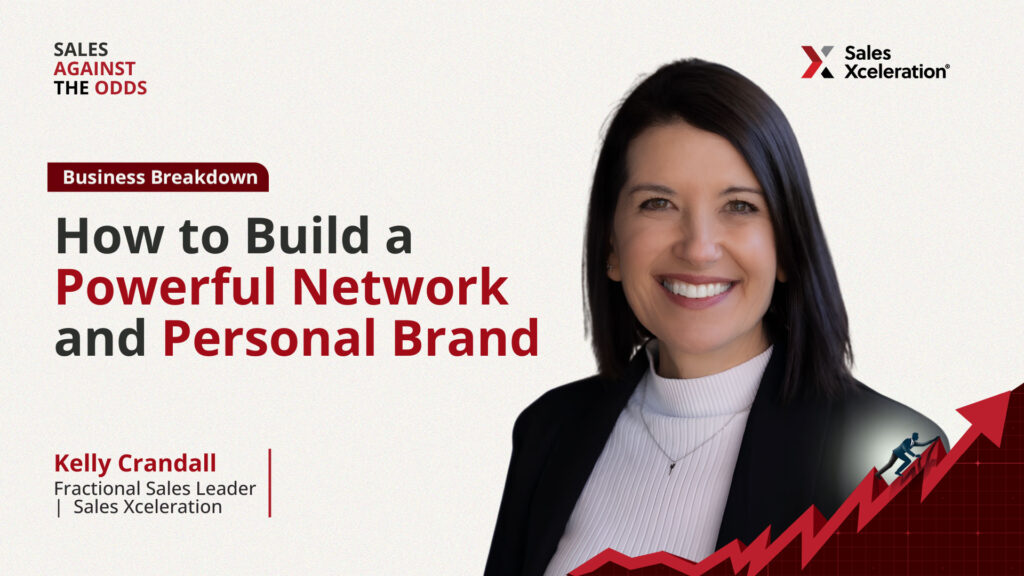
How to Build a Powerful Network and Personal Brand with Kelly Crandall
How To Become Irreplaceable To Your Customers with Scott McKain
Scaling Beyond the Ceiling: EOS, Accountability, and AI with Jason Green
Related Articles


Subscribe
Share This Episode
Episode Highlights
(00:00) Introduction
(01:42) Kelly’s journey building her personal brand at Sales Xceleration
(02:41) What makes a great connector
(04:05) Turning genuine help into real referrals
(08:22) Building your brand through social media
(10:42) What makes a good peer group
(14:50) Growing your network through speaking engagements
(23:55) Becoming the “Kevin Bacon” of your network
About the Guest

About the Host
