

Most people walk into a networking event hoping to leave with a referral. The best connectors walk in thinking about what they can give. That mindset shift is what separates a busy calendar from a powerful network.
Referral partners serve the same clients with different services, and the strongest partnerships run on trust, not transactions. Whether you’re a business owner, sales professional, or in a leadership role, it all starts with one question: What can I do to help you?
You Have Two Brands. Protect Both.
If you lead or represent a business, you carry two brands at once. There’s your company, and there’s you: how you show up, how you treat partners, and the quality of work you deliver.
The company brand opens doors, while your personal brand determines what happens once you’re through them. Treat your reputation as something to build and guard deliberately, with the goal of becoming the recognized expert in your field.
Great Connectors Are Servant Leaders
Many professionals spend years heads-down inside their own companies, which means they start out internally focused, without a big local network. The good news: great connectors aren’t born; they follow a pattern.
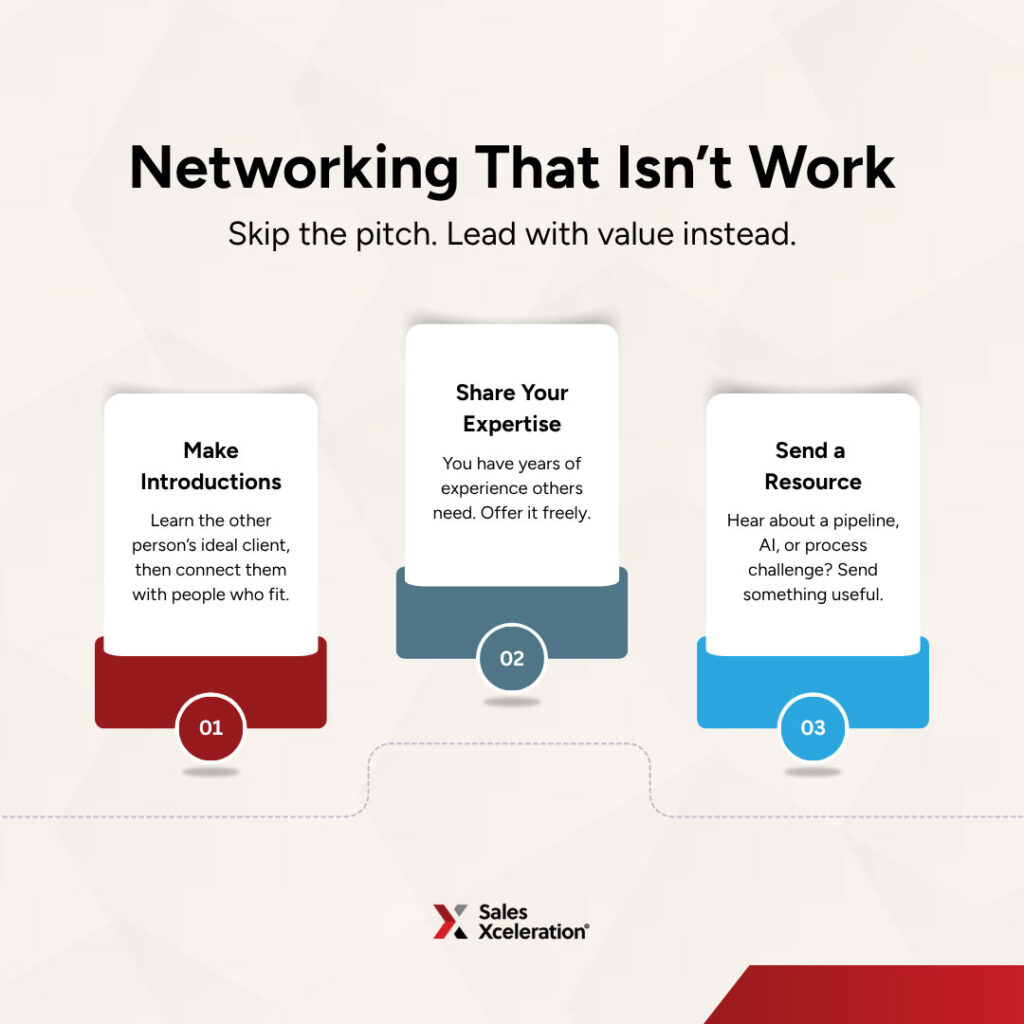
These are people you’re genuinely happy to see. They invest time in getting to know you, and they look for ways to help before asking for anything. There’s three easy ways to do that:
- Make introductions: Learn the other person’s ideal client, then connect them with people who fit.
- Share your expertise: You have years of experience others need. Offer it freely.
- Send a resource: If someone’s struggling with pipeline, AI, or documenting a sales process, follow up with something useful. It costs you almost nothing.
Referrals Are the Result, Not the Goal
Here’s where many professionals go wrong. They meet a potential referral partner and immediately expect business. That’s too self-serving, and people can feel it.
A referral is a transfer of trust. When someone recommends you, they’re putting their own reputation on the line. That trust must be earned first, through consistent value and a real relationship. Show up as a helpful partner, and when the right opportunity appears, you’ll be the one they think of.
Do What You Said You’d Do
Social media matters. Post event photos on LinkedIn, tag the people you met, and promote the organizations you support. It builds awareness. But a post isn’t a relationship.
The real brand-builder is follow-through. If you promised coffee, schedule it. If you mentioned a resource, send it. It’s the simplest way to show people what it’s like to work with you.
Treat referral partners with the same care you give customers. Remember the details. Ask how the big game went. Stay top of mind by showing you actually listened.
Choose Peer Groups with Intention
Two types of peer groups are worth your time:
- Referral groups work best when everyone shares the same ideal client. If you serve small and midsize businesses, a group focused on the upper market won’t align.
- Educational groups sharpen your craft. Learning alongside investment bankers, fractional CFOs, and other advisors deepens your understanding of the challenges your customers face.
The bonus? Your best referral partners often become genuine friends. When relationships extend beyond business, the whole dynamic changes.
Build Your Own Group
As your client work grows, one-on-ones with every favorite connection get harder to schedule. The fix: start your own monthly peer group. Invite trusted professionals with no overlapping services, such as a fractional CFO, HR consultant, banker, attorney, and accountant, and keep it free.
Build each 90-minute meeting around three things: staying personally connected, sharing industry insights, and swapping upcoming events members can attend together. Keep referrals off the agenda. They happen naturally as the relationships deepen.
Become the Connector Everyone Knows
The most valuable thing you can do for your network is expand everyone else’s. Make your introductions count:
- Personalize every intro: Include names, companies, and hyperlinked LinkedIn profiles to make connecting effortless.
- Ask people how they want to be introduced: Save their preferred intro and reuse it, so you always get it right.
If connecting doesn’t come naturally yet, start with your expertise. Everyone has knowledge that can help someone else. Give first, and the return comes when the timing and opportunity are right.
Hear the Full Conversation
These strategies come from a recent episode of Sales Against the Odds, the podcast for leaders who want to win against the odds. Give it a listen for more practical networking tips.


